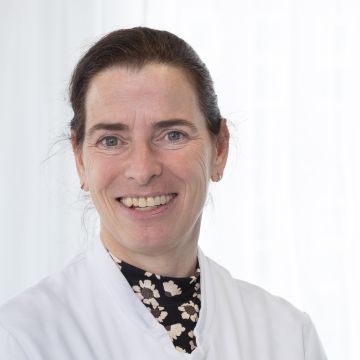
Dr. Hannerieke van den Hout (J.M.P.)
Child neurologist
Short introduction
Neurometabolic diseases have a profound impact on movement, heart function, breathing, cognition, behavior, and sleep. These conditions can also lead to childhood dementia, with devastating consequences for the lives of the child, parents, and siblings. My goal is to maximize each child's abilities and to support parents and siblings. I do this through intensive multidisciplinary treatment and therapy. In addition, I work together with our preclinical laboratory and multidisciplinary team on the development of new therapies, and I conduct clinical research into the effects of emerging treatments.
Work experience & education
I graduated as a medical doctor in 1995. Even during my training, my passion was to maximize the abilities and potential of children. In 1998, I began my PhD research on the first global treatment for patients with Pompe disease, which I completed in 2003. This groundbreaking study introduced enzyme replacement therapy and marked a major breakthrough in the treatment of this previously fatal muscle disorder. The success of this therapy opened new possibilities for patients with Pompe disease and other lysosomal storage disorders. It made Pompe disease the first treatable muscle disease.
In 2006, I became a registered pediatrician and in 2008 a pediatric neurologist. Since then, I have been working at the Center for Lysosomal and Metabolic Diseases, where I further specialized in the consequences of neurometabolic diseases—such as lysosomal storage disorders—on muscles, nerves, and the brain.
Every day, I work with passion toward a better future for children with neurometabolic diseases, striving to improve their quality of life and that of their families.